

Drone Photography That Tells the Full Story
A wedding ceremony framed by the coastline. A packed stadium caught in the split second before a winning play. A property revealed in its full setting, from the front entrance to the water beyond the backyard. Drone photography brings a sense of place to images that matter, showing not only what happened, but where the story unfolded.
For meaningful celebrations, public-facing brands, and spaces designed to be seen, aerial imagery can add a perspective that feels cinematic without losing the authenticity of the moment. The strongest drone images are never just about height. They are about choosing the view that gives a memory, a brand, or a property greater emotional weight.
Drone Photography Is More Than a High View
A drone can show scale instantly. It can reveal the shape of a wedding venue, the energy of a festival crowd, the movement of athletes across a field, or the relationship between a home and its surroundings. Ground-level photography captures the expressions, details, and quiet connections that make a story personal. Aerial imagery supplies the context around them.
That distinction matters. A beautiful venue may have sweeping gardens, dramatic architecture, or a waterfront location that cannot be fully appreciated from eye level. A commercial project may need to show accessibility, surrounding landmarks, or the size of an operation. In each case, the aerial frame gives viewers an immediate understanding of the environment.
Still, a drone should not be used simply because it is available. The most effective aerial images have a purpose. They might establish a destination, create a breath between intimate moments in a wedding film, or give a business a polished visual asset that feels larger than a standard marketing photo. When every angle supports the same story, the final gallery or video feels considered rather than crowded.
Aerial Wedding Imagery That Honors the Moment
For weddings and elopements, timing is everything. The day moves quickly, and the people at its center should never feel as though they are performing for a camera. Drone photography works best when it is thoughtfully planned around the flow of the celebration, not when it interrupts it.
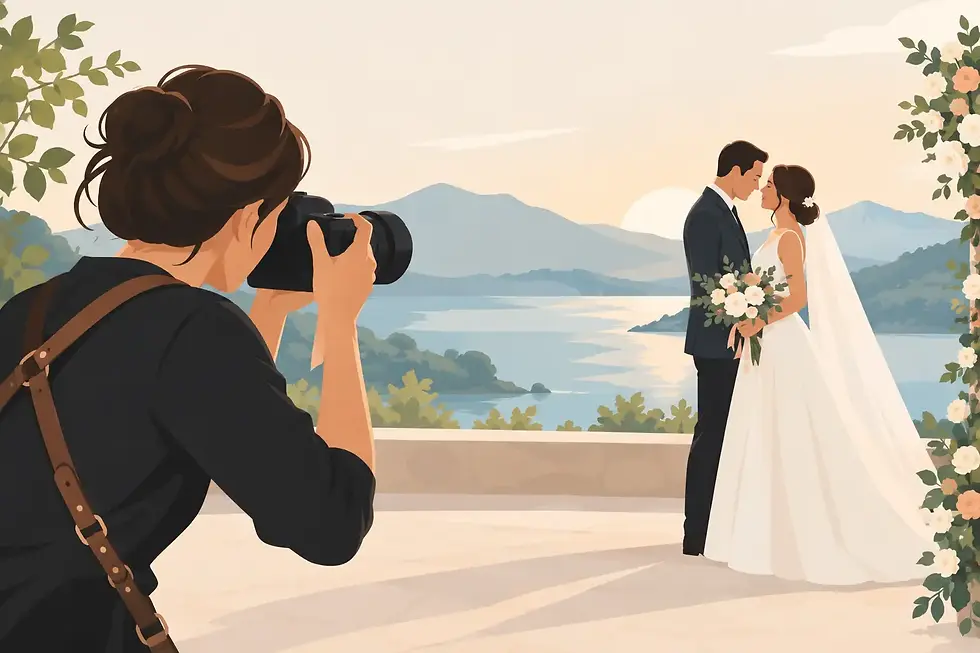
Aerial coverage can be especially meaningful during a first look in an open landscape, a ceremony set against the beach, a sunset portrait session, or a lively reception entrance. From above, a bride and groom walking along the shoreline become part of a larger, unforgettable scene. A gathering of family and friends can feel both intimate and grand when the setting is given room to breathe.
The trade-off is that not every wedding location is appropriate for drone use. Airspace restrictions, venue policies, nearby airports, weather, wind, and guest comfort all need to be considered before the day arrives. Some of the most heartfelt wedding photographs happen indoors or beneath tree cover, where a drone adds little value. A trusted photographer will recognize when to fly and when to stay grounded, always protecting the experience first.
For couples, this means aerial images should feel like an added layer of storytelling, not a separate production. The goal is still the same: honest emotion, elegant details, and photographs that return you to how the day felt.
Events and Sports Need Energy and Perspective
Events are full of movement. Guests arrive, speakers take the stage, music begins, teams compete, and the atmosphere changes by the hour. Aerial images can capture that momentum in a way that a single ground-level frame cannot always convey.
For a corporate event, a drone may show the scale of an outdoor activation, the flow of a crowd, or the setting that makes the experience distinctive. For community celebrations, concerts, and fundraisers, it can preserve the shared energy of people coming together. These images are valuable long after the event ends, serving as visual proof of turnout, atmosphere, and impact.
Sports coverage is another natural fit. From above, the geometry of a court, field, track, or course becomes part of the visual story. Aerial video can follow the pace of a race, reveal a team lineup, or create a powerful opening sequence for a highlight reel. It does not replace close action photography - the facial intensity, speed, and contact still belong at ground level - but it expands the way the performance can be remembered.
Safety remains central in these environments. Flying near crowds or active play requires careful planning, proper distance, and respect for the venue's rules. Great coverage should feel exciting to watch and calm to execute.
Drone Photography for Properties and Brands
For real estate, hospitality, construction, and local businesses, first impressions often begin before a client steps through the door. Aerial photography can show a property's footprint, exterior features, surrounding streets, nearby water, green space, and the lifestyle connected to the location.
A well-composed aerial photograph does more than make a listing look impressive. It answers practical questions visually. Is the home close to the beach? Does the property have privacy? How does the building sit within the neighborhood? Is there a large outdoor entertaining area, parking, or access to major roads? Buyers and customers can understand those details quickly when the imagery is clear and purposeful.
For brands, the same principle applies. A restaurant with a striking patio, a resort with a dramatic pool area, or a company with a large-scale facility can use aerial content to communicate confidence and character. The strongest images balance polish with truth. Overly dramatic angles may look impressive for a moment, but they should never misrepresent the space or create expectations the experience cannot meet.
At Chris Curtis Media, aerial imagery is approached as part of a larger visual narrative. Whether the subject is a celebration, a property, or a brand, the goal is to create images that feel refined, useful, and unmistakably connected to the story being told.
Planning for Better Aerial Images
The best drone sessions begin before the propellers lift off. A short conversation about the location, timeline, desired mood, and intended use of the final images helps shape the right approach. A wedding client may want one dramatic sunset image for an album. A commercial client may need a range of vertical and horizontal assets for campaigns, web pages, and social media. Those are different needs, and they call for different shot planning.
Light also makes a meaningful difference. Early morning and late afternoon often create softer color, longer shadows, and a more romantic or editorial look. Midday can be useful when clear visibility is the priority, especially for property coverage, but it may feel flatter and more direct. Florida weather adds another consideration: wind, sudden rain, and changing cloud cover can affect both safety and the final look.
It is also wise to build flexibility into the plan. If aerial conditions are not safe or permitted, the story should still be fully covered with strong photography and video from the ground. The final result should never depend on one shot. It should be built from a complete, thoughtful visual approach.
The view from above can be breathtaking, but its real value is more personal. It lets a couple see the place where they promised forever, gives an event organizer a lasting sense of the crowd they brought together, and helps a business show the world exactly where its story begins.


Comments