
How to Plan Meaningful Wedding Detail Photos
The morning of a wedding moves quickly: makeup brushes on the counter, a handwritten note waiting to be opened, family members arriving with coffee and last-minute questions. Detail photos create a quiet pause within that energy. When you plan meaningful wedding detail photos, you give the small, carefully chosen pieces of your celebration a place in the story, from the invitation suite that set the tone to the heirloom tucked into your bouquet.
These images are not simply photographs of objects. They become the opening pages of your wedding gallery, preserving the anticipation, texture, and personal history that surrounded the day. A little advance thought helps your photographer create images that feel elegant and intentional without taking you away from the moments you came to enjoy.
Start With the Details That Carry Your Story
Meaningful does not have to mean expensive or elaborate. The most memorable details are often the items that reveal something true about you as a couple. Your grandmother's earrings, a note exchanged before the ceremony, a piece of fabric sewn into a dress, or cuff links given by a parent can say far more than an item selected only because it photographs well.
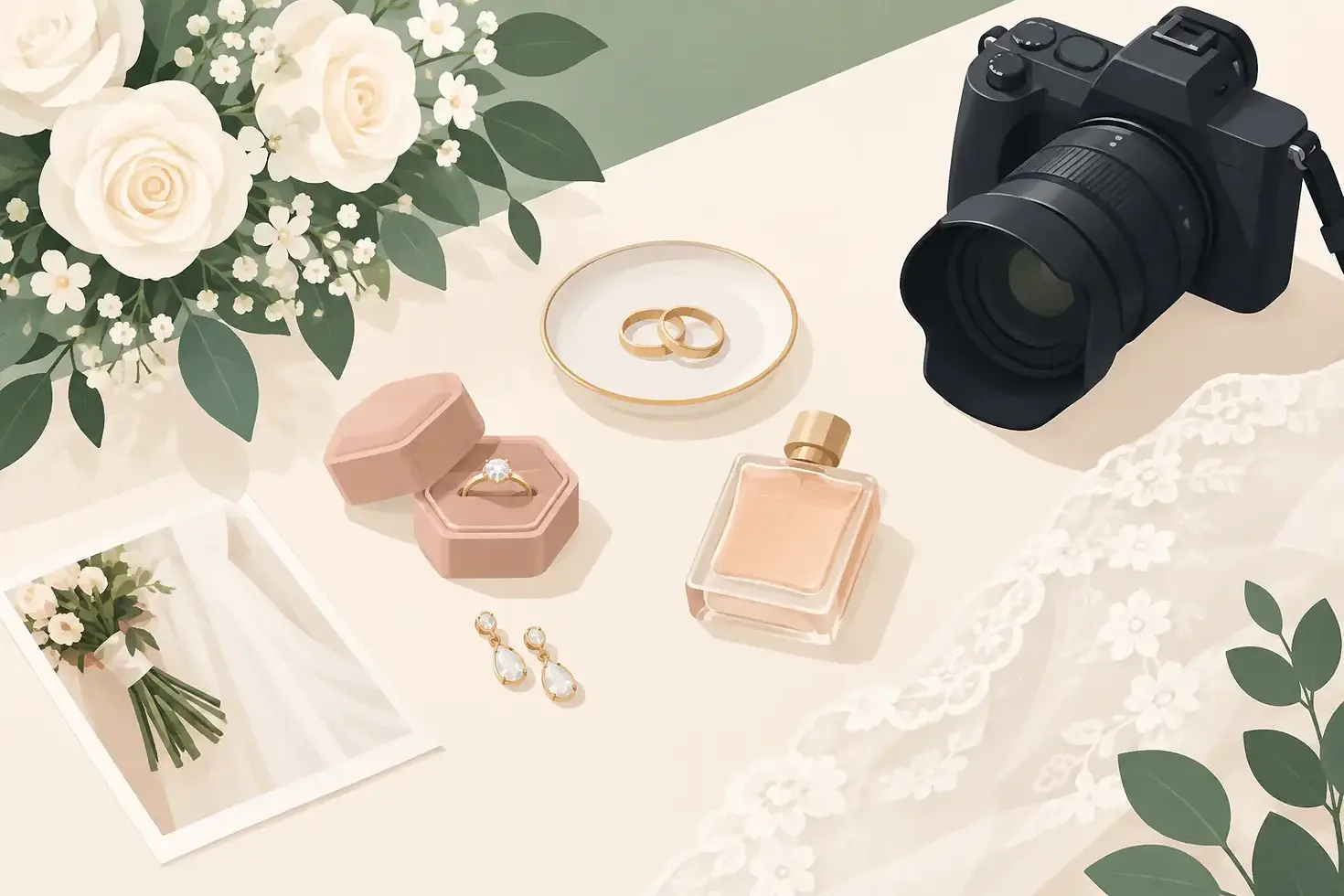
Set aside the essentials first: both rings, the invitation suite, your dress or outfit, shoes, jewelry, veil, bouquet, and fragrance. Then add the pieces with a personal connection. For one couple, that may be a family Bible or a locket. For another, it may be a custom matchbook from the place where they got engaged, a favorite record, or a small token from their dog waiting at home.
Consider the visual balance, but do not overthink it. Five to 10 well-chosen items give your photographer room to style with purpose. A large collection can work if every piece matters, but too many unrelated objects may pull focus from the things you will care about years from now.
Tell Your Photographer What Matters Most
A photographer can see that an heirloom is beautiful, but only you know why it belongs there. Before the wedding, share a brief note about the items that carry history or emotional weight. Mention who gave you the necklace, why you chose a particular scent, or the story behind the embroidered handkerchief.
That context informs the way the image is made. A wedding band may be photographed as a clean, sculptural detail. A ring passed through three generations deserves a more intimate frame, perhaps alongside a note or textile that supports its history. At Chris Curtis Media, that personal context is part of creating photographs that feel like your wedding rather than a collection of generic inspiration images.
Build Time Into Your Wedding Morning
The greatest challenge with detail photos is rarely styling. It is time. If the photographer arrives as hair and makeup are finishing, the dress is being buttoned, and transportation is already waiting, those quieter images become rushed or disappear entirely.
Plan for your photographer to have approximately 30 to 45 uninterrupted minutes with the key details at the beginning of coverage. The exact timing depends on your schedule, the number of locations, and whether both partners are getting ready at the same venue. A larger invitation suite, several heirlooms, or a more editorial visual direction may benefit from a little extra time.
This does not mean you need to be present for every photograph. Put everything in one designated box, tray, or bag before the wedding day and ask a trusted person to make sure it reaches your photographer. That simple preparation lets you stay relaxed with your wedding party while your story is being documented thoughtfully.
If you are getting ready in a darker hotel room or a space with visual clutter, talk through alternatives with your photographer. Window light, a neutral corner, or a nearby suite can make a significant difference. Still, perfection is not the goal. A room that holds real memories of your morning can be part of the atmosphere, especially when photographed with intention.
Create a Detail Box the Night Before
Packing a detail box is one of the easiest ways to plan meaningful wedding detail photos without adding stress to the wedding morning. Choose a small container that protects delicate pieces and keeps everything together during travel.
Include the items you want photographed, along with practical extras that may support the styling: two complete invitation suites, loose postage stamps if you have them, ribbon, vow books, ring boxes, and any small heirlooms. Bring more than one invitation set whenever possible. Your photographer may need to remove an insert or use the envelope separately to create a layered composition, and an extra suite prevents unnecessary worry.
Keep the rings with a trusted person until the photographer is ready for them. This is a sensible balance between protecting valuable jewelry and allowing enough time for intentional photographs. If you have a special ring box, include it, but do not buy one just for the photo. Your rings should still look and feel like yours.
Think Beyond the Bride's Details
Wedding detail photos are often associated with the dress, bouquet, and jewelry, but the other partner's story deserves space too. A watch, jacket, tie, shoes, boutonniere, handwritten letter, or meaningful accessory can create a fuller picture of the day.
For couples who are getting ready together, those items can be photographed as one shared collection. For separate locations, plan a small set of details for each space. The goal is not to make the images identical. It is to show two perspectives coming together in one celebration.
Let Your Design Choices Guide the Styling
Your paper goods, florals, attire, and venue already offer a visual language. A coastal wedding may include soft blues, textured linen, and organic blooms. A formal ballroom celebration may lean into polished stationery, clean lines, and classic black-and-white details. A Florida garden wedding might bring warmth, citrus tones, and abundant greenery into the frame.
Share your color palette and any design intentions with your photographer and planner ahead of time. This is especially useful if you have distinctive stationery, custom menus, or florals that are central to the look of the day. Your photographer can then select backgrounds and supporting elements that complement the design rather than compete with it.
There is a trade-off here. Highly styled detail images can feel beautifully editorial, while simpler arrangements often feel more intimate and timeless. Neither approach is better. Choose the one that reflects how you want to remember the day. If you love refined, artful imagery, give your creative team room to compose. If your priorities are candid connection and ease, keep the collection focused and let the details appear naturally within the morning.
Protect the Moments Around the Details
The best detail-photo plan does not turn your wedding morning into a production. It creates enough structure that everything can unfold calmly. Put the essentials in one place, communicate what matters, and allow the professionals you chose to do their work.
Avoid saving meaningful items for later in the day. Bouquets wilt, invitations get misplaced, and jewelry may be packed away as the schedule gains momentum. Gather what you can before the morning begins, then release the need to manage every frame.
A thoughtful photo of your grandmother's earrings is valuable. So is the moment your mother helps fasten them. Leave space for both. The objects give your gallery texture, but the hands holding them, the letters being read, and the laughter filling the room give those details their lasting meaning.
When you look back, the smallest pieces may bring the clearest memories: the torn edge of a note, the curve of your invitation lettering, the ribbon around your flowers. Plan them with care, then let them become part of a day that feels fully, unmistakably yours.


Comments